
Finding Purpose Through Service
January 28, 2026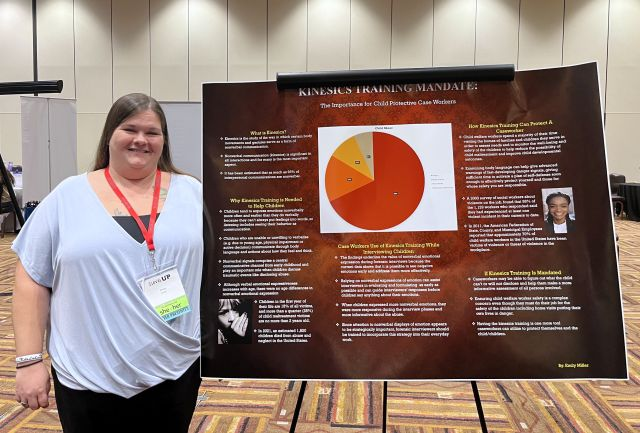 For students Emily Miller and Jo Gongaware, choosing a career in social work was not
simply about selecting a major. It was about aligning their education with their values,
lived experiences and a desire to create change. At Westmoreland County Community
College (Westmoreland), both students found not only an academic pathway, but also
a community that helped shape their futures.
For students Emily Miller and Jo Gongaware, choosing a career in social work was not
simply about selecting a major. It was about aligning their education with their values,
lived experiences and a desire to create change. At Westmoreland County Community
College (Westmoreland), both students found not only an academic pathway, but also
a community that helped shape their futures.
Jo Gongaware’s path to social work began in an unexpected place. Right out of high school, Gongaware attended Wright State University to study acting. While immersed in performance, they became increasingly interested in social critique and transformative forms of theater, particularly Theatre of the Oppressed. Through these studies, Gongaware encountered concepts such as radical non-judgment and gained a deeper understanding of how material conditions and lived experiences shape people’s actions and mindsets.
After leaving Wright State, Gongaware began considering what would come next. One thing seemed very clear, they wanted to work with people. Drawn to sociology, psychology, history and political science, Gongaware discovered that social work offered a holistic approach that brought all of those interests together.
“Rather than hoping a performance changes one audience member’s perspective,” Gongaware shared, “I could focus on building social cohesion and community assets.” The profession’s ability to operate at the intersection of individuals, communities and systems made social work the perfect fit.
Emily Miller’s decision to pursue social work was equally powerful, rooted deeply in her own life experiences. Returning to higher education later in life, Miller saw Westmoreland as an opportunity to finish what she first attempted in 2008. As a 40-year-old mother, she needed an option that was realistic, supportive and flexible. What she found exceeded her expectations.
“The experience has been more than I could have hoped for,” Miller said. “I feel like I have found a family at Westmoreland.”
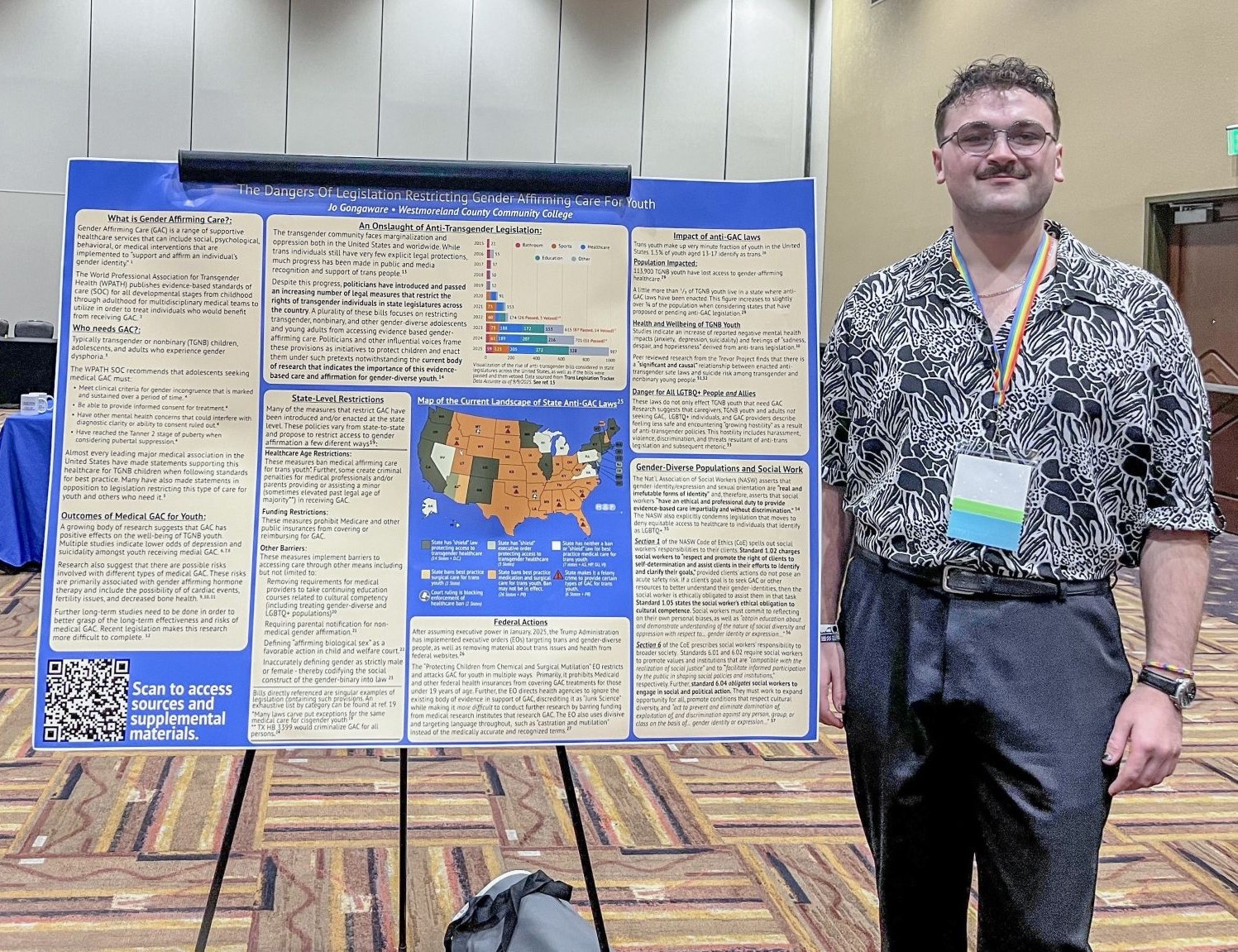
That sense of belonging reflects a growing interest in Westmoreland’s Social Work program. Enrollment continues to rise, and student achievement is gaining recognition beyond campus. Most notably, Westmoreland social work students were recently invited to present their research at the PA National Association of Social Work conference. Associate degree–seeking students presented their work alongside bachelor’s, master’s and doctoral candidates, an honor that highlighted both the quality of their research and the strength of a community college education. This was the first time in the history of the conference that associate degree-seeking students were able to present.
Gongaware described the experience at the conference as both affirming and important. “I think it is great exposure for community colleges and shows that they are just as valid, important and needed as four-year institutions,” Gongaware stated.
Gongaware also noted the financial and social barriers many students face when pursuing higher education and the lingering stigma surrounding community colleges.
“We know these things are not true, and community college students being allowed in these spaces will continue to dispel those myths and reveal the power and necessity of these institutions,” Gongaware commented.
Looking ahead, both students have clear goals shaped by their time at Westmoreland. Miller hopes that within five years she will be working at the Westmoreland County Children’s Bureau, serving families and children in her own community. What began as a plan to earn an associate degree has evolved into her planning to continue her education at Seton Hill University this fall.
Gongaware, meanwhile, aspires to work at the mezzo or macro level of social work, focusing on social, labor and civic organizing, policy, and community action. Their vision centers on empowering communities to strengthen their assets and improve conditions for all, particularly those who are oppressed. Art will remain the central mission. Gongaware reflected that “the function of art is to do more than tell it like it is. It is to imagine what is possible. Once people can imagine what is possible, they believe, and change becomes inevitable.”
Both students credit the faculty and staff at Westmoreland for helping them reach these milestones. Miller and Gongaware alike point to Professors Stephanie Turin and Dr. Amanda Reamer as instrumental mentors.
Miller shared her gratitude that Professors Turin and Reamer “consistently pushed me outside my comfort zone to achieve things I never thought possible by believing in me.” Miller also recognized Jesse Somers, her TRIO counselor, for providing ongoing support.
Gongaware highlighted Professor Turin’s guidance throughout the social work program and Dr. Reamer’s “unyielding support” as key elements toward the drive to succeed in the program.
For Emily Miller and Jo Gongaware, Westmoreland County Community College has been more than a college. Through rigorous academics, meaningful mentorship and a strong sense of community, Westmoreland has been a catalyst to their future careers in Social Work. It is their hope that Westmoreland continues to open doors for students who are ready to serve, advocate and imagine a better future for the communities they call home.