MADE @ Westmoreland Workshops
Intro to Ceramics
Friday, October 16 | 2:30-4:30 p.m.
Introduction to ceramics is a foundational workshop involving hands-on instruction of clay preparation practices and various techniques of construction and finishing. Session 1 will cover basic clay preparation habits as well as introduce wheel throwing, coiling, pinch pots, and slab building techniques. Session 2 will introduce an array of finishing techniques such as trimming, burnishing, wax resist, sgraffito, mishima, carving, and various traditional glaze applications.
Beginners Hand Building Workshop
Wednesday, October 28 | 4:30-6:30 p.m.
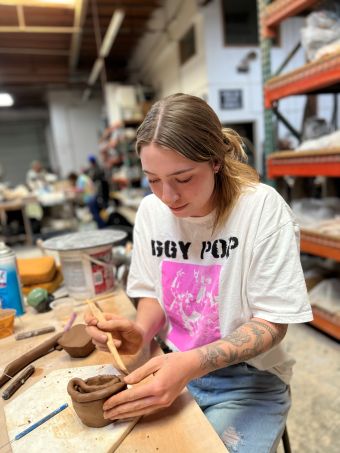
This introductory hand building course will cover traditional methods such as coiling, slab building, and pinch potting. Session 1 will be spent learning clay basics hands-on such as wedging and effective tool usage. We will explore the endless possibilities of hand building for inspiration for an introductory project. Projects will be self-determined with guidance provided by the instructor. Session 2 will involve finishing projects from session 1 or starting and completing a new project.
Beginners Wheel Throwing Workshop
Friday, November 13 | 2:30-4:30 p.m.
The wheel throwing workshop will teach you briefly about the basics of clay with special emphasis on constructing vessels via potter's wheel. We will cover clay fundamentals in session 1, such as proper wedging and effective tool usage. We also will go over wheel basics, including safety, proper postures, and methods for clay centering, opening, and pulling walls for cylindrical vessels. Session 2 will be open studio practice for centering, opening, and pulling walls with opportunity for a lesson in trimming.
REGISTER
Surface Embellishment Workshop - Trinket Bowl and Soap Dish
Friday, December 11 | 2:30-4:30 p.m.
This workshop will focus on ways to make a piece of ceramic unique using surface designs. Some time in session 1 will be used to construct simple trinket bowls and soap dishes to use as a base for exploration in embellishments. Techniques will be introduced and chosen for your wares. Choose between underglaze transfers, water etching, impressions, stencils, sgraffito, mishima, carving, paper resist, or slip trailing!
During session 2 we will finish decorating our projects.